
Originally written by Jovana Stanisljevic for The Conversation.
By late February 2020, reported COVID-19 cases had surpassed 80,000, with nearly 2,700 deaths. Efforts to contain the outbreak have led to full or partial quarantines of several Chinese provinces and cities, as well as other countries that have been hit. At the time, movement restrictions were estimated to affect 500 million people.
As the human costs in China and other countries continued to rise, the virus was also taking a toll on industry. Weaker demand and disrupted supply increased uncertainty about the global economy.
SARS and COVID-19
This was the second major coronavirus outbreak China had faced in less than 20 years. The SARS outbreak that began in 2002 killed about 800 people and infected about 8,000. Although the economic impact of SARS was difficult to assess, a 2004 analysis indicates that the global economy experienced a loss of at least 40 billion US dollars in 2003 and a growth slowdown of 1%.
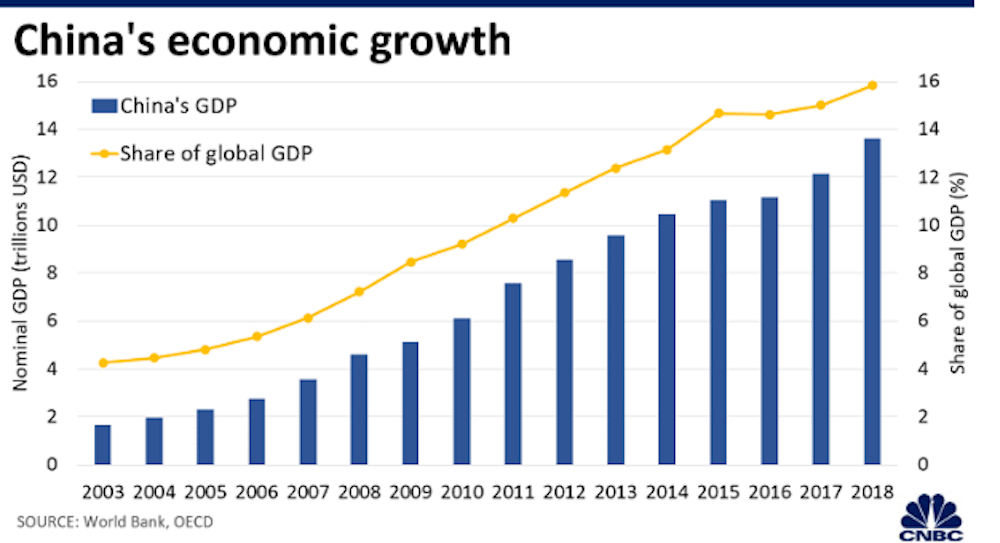
By 2020, the size of China’s economy and its position in the world had changed considerably. In the wake of the SARS outbreak, China represented slightly over 4% of the global GDP and was the sixth largest economy in the world. At the time of writing, it accounted for more than 16% of the world’s GDP and was the world’s second-largest economy, after the United States.
Additionally, the country has traditionally been the biggest source of global growth – in 2019 alone its contribution surpassed 39%.
Manufacturing under pressure
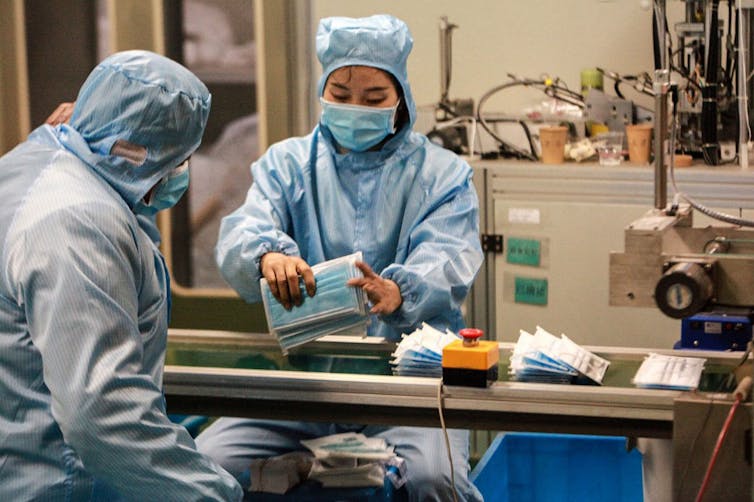
Globalization positioned China at the heart of complex supply chains, as companies worldwide came to depend on supplies from their operations there. As a consequence, factory shutdowns in virus-affected provinces have resulted in shocks across a wide range of industries.
The South Korean car-maker Hyundai was the first firm outside of China to announce that it would halt production in its domestic factories as a result of component shortages. Automobile producers in Europe and the United States have also warned they too will soon start running out of components.
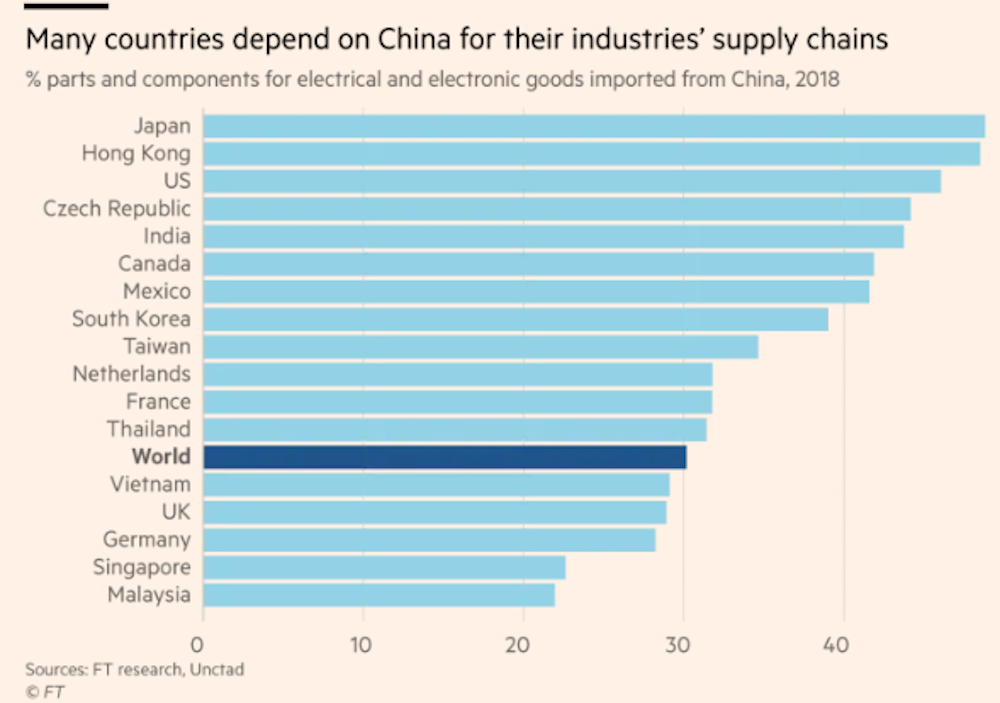
The impact is similar in the technology sector, as China was the leading exporter of electronic components, with nearly 30% of the global export market. Disruptions in deliveries are particularly harmful for countries highly dependent on electronic supplies from China. For example, in 2019 Japan imported more than 45 billion dollars’ worth of Chinese electrical and electronic goods.
Commodity markets face volatility
China is also the largest importer of raw materials, and commodity markets are consequently feeling the impact as well. The International Energy Agency (IEA) expected that global oil demand growth in 2020 would be 30% lower than initially forecast. It revised its estimate from 1.2 million barrels per day to 825,000.
Similarly, the decline of the industrial activity in China was a shock to the copper market, as the country represents half of global demand. Copper is used in a wide range of industries, including automobiles, mobile phones and domestic appliances. Falling cross-sector sales have resulted in Chinese traders postponing or outright canceling contracts with suppliers from Latin America and Africa, citing “force majeure” clauses – events beyond their control.
Plummeting demand, rising concerns
On the demand side, the impact is already being felt in the travel and tourism industry. The airline sector was expected to lose up to US$29 billion in revenue that year, as demand for air travel declines for the first time in the last 11 years.
Chinese tourists represent the largest group of outbound global travellers. They favour Asia-Pacific countries – the top three destinations are Hong Kong, Macao and Thailand – and in 2019, Thailand welcomed approximately 10 million visitors from China, representing 30% of its arrivals. Since the outbreak, Thai officials estimate that around 1.3 million visits have been cancelled for February and March alone.
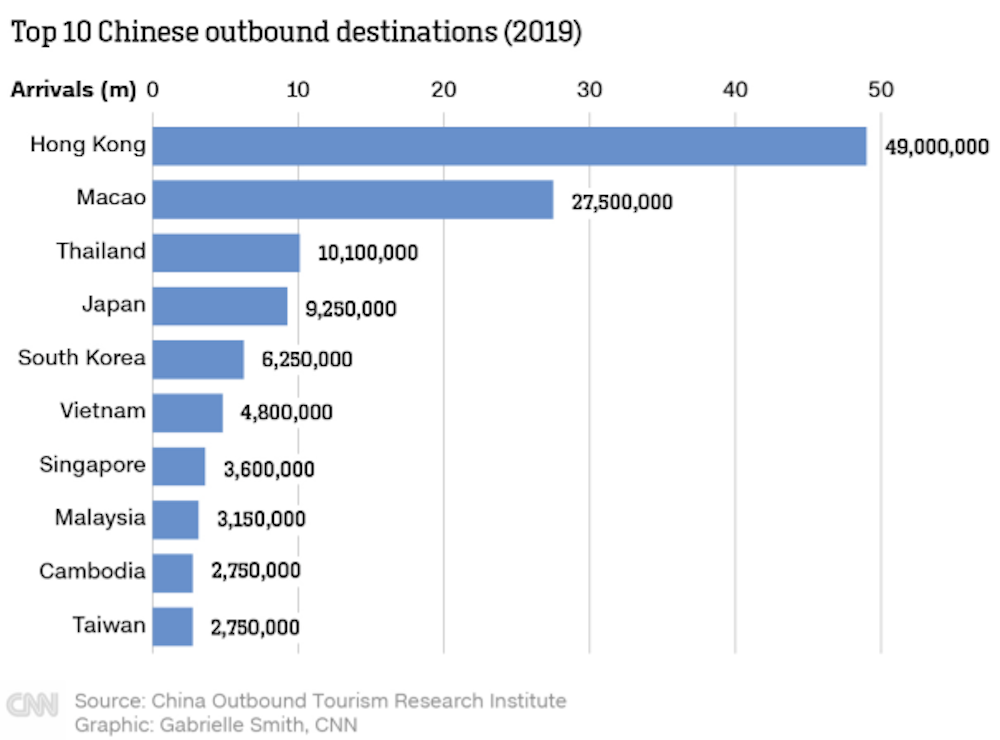
For the time being, the impact on European tourism is relatively limited. While Paris annually hosts around 800,000 Chinese tourists, this represents only 3% of all tourist visits. However, concerns were growing over the fact that Chinese often travel in groups, with a specific choice of hotels that are now facing vacancies. Similar trends are reported in other European countries such as Germany, Spain and Austria.
A particular passion of Chinese travellers is luxury retail. Since the early 2000s, the country’s shoppers have developed a taste for high-end products and accounted for 33% of the market for personal luxury goods in 2018, a share that is – or was – projected to rise to 46% by 2025. The industry is now facing its biggest challenge since 2008, as major luxury groups such as Kering, LVMH and Tiffany become increasingly dependent on rising Chinese demand.
What lies ahead?
At the time, the outlook depended largely on how the COVID-19 crisis evolved. In the best-case scenario, the virus will be contained in the near future or start slowing down in the early spring. People will resume work in China and industrial activity will pick up again. That should bring relief to the Chinese economy and the globe-spanning businesses that depend on it. The lagging demand will likely bounce back relatively quickly, particularly with the help of tailored government measures.
If the virus continues to spread across China, East Asia and other world regions, however, uncertainty and disruption will increase. Movement restrictions would continue and supply chains that are currently temporarily disrupted would decompose entirely, and factory shutdowns would inevitably follow, not just in China but also other markets. Some companies might consider revising their supply chains to find alternatives for China, but experience shows that that’s easier said than done.